ABOUT
Daire Lennon is a Dublin-based composer, technologist and sonic artist working across experimental music, audiovisual installation and live performance. His practice explores composition and the relationships between sound, environment and interaction. Working with recorded and synthesised sound, he develops sonic works through processes of abstraction and transformation. His practice also explores the relationship between sound and visual imagery, alongside the development of custom tools and interfaces for composition, performance and interaction.
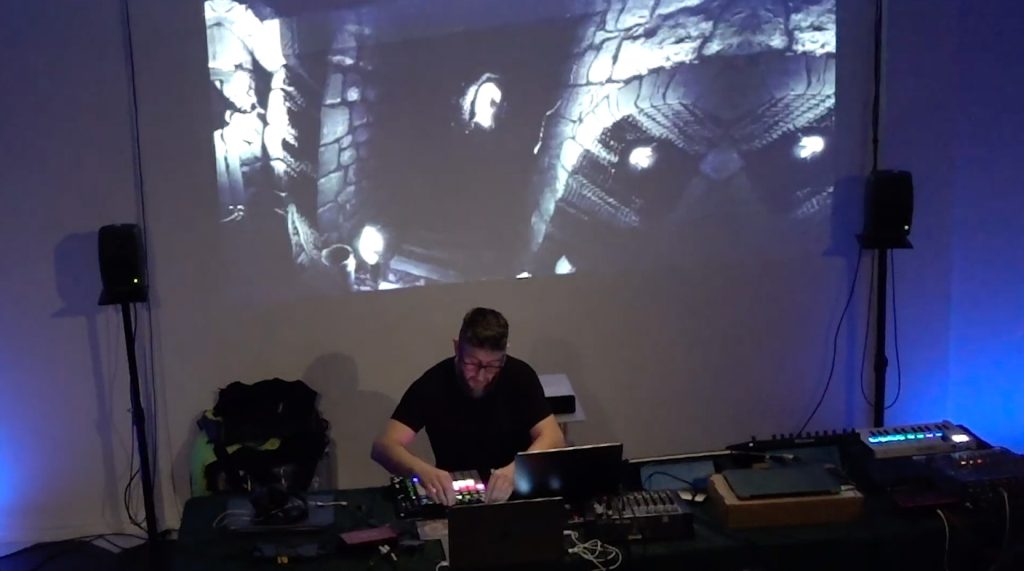
His musical practice extends across several individual and collaborative projects. Performing under his own name, he explores experimental composition and audiovisual performance. His solo electronic music project, Orphanth, emerged during lockdown through recording and online performances. It subsequently became a platform for his live experimental electronic music practice. He has independently released music as Orphanth, with a second release planned for January 2027.
His collaborative projects include o|nism, formed in 2025, which combines heavy drones with live percussion and is currently recording its debut release. He is also one half of Austice, a collaborative experimental electronic music project exploring meditative sonic territories and immersive listening experiences.
His installation and audiovisual work explores different approaches to composition, interaction and the presentation of sound. In 2024, he developed Sonic Abstractions, an interactive audiovisual work exploring the relationships between painting, colour, gesture and sound through a custom-built interface.
In May 2025, he was commissioned to create All We Feel Is How It Moves for Dublin’s Hugh Lane Gallery. Conceived by Daire and developed in collaboration with Anna Rose Garvey, the hour-long performance drew upon environmental recordings, live urban data and movement within the performance space to shape an unfolding audiovisual composition.
Later that year, he was commissioned to create Tracings for Culture Night in Drogheda. The project saw him deliver eight live performances throughout the evening, alongside an interactive audiovisual installation and visual works created for multiple screens along the town’s main street. Compositions from both Tracings and All We Feel Is How It Moves have been released under his own name.
His visual practice also extends to creating live visuals for other artists and music events, including local bands and the development and performance of visuals for each of the acts at Druim Fest in August 2026. His experimental visual music works were screened internationally at the Singularity Festival in 2025.
Alongside his artistic practice, Daire founded and organises Fronics, an independent initiative dedicated to experimental electronic music. Established through a series of live events at Unit 44 in Dublin, Fronics provides a platform for artists to present experimental work and brings together practitioners from different areas of electronic music. The initiative has also expanded into alternative performance formats and listening environments, including headphone-based events that explore the presentation of music in an immersive format within unconventional spaces.
Daire teaches Visual Music on the Music and Media Technologies master’s programme at Trinity College Dublin and has delivered workshops in audiovisual practice at the National College of Art and Design.
He is currently undertaking a practice-based PhD in the School of Music at Trinity College Dublin, exploring interactive generative composition and the relationship between composers, systems and audiences. His research investigates how interactive generative systems can expand his compositional practice and how environmental conditions and audience presence can influence the unfolding of musical works.
Daire Lennon is a Dublin-based composer, technologist and sonic artist working across installation and live performance. He creates sonic environments using field recordings, synthesis and responsive systems that invite audience interaction or evolve in real time.
His installations feature custom interfaces and visual elements that allow viewers to engage directly with the sound. In performance, he combines generative systems with live control and reactive visuals. He performs solo under his own name and also as Orphanth, each exploring different aspects of his musical practice. He is also one half of the collaborative project o|nism.
Recent work explores how real-world inputs from public transport data to colour and gesture can shape immersive, open-ended soundscapes designed for listening, exploration and shared experience.